Key takeaways
- Most sideboards and buffets are 30 to 36 inches tall, about as tall as the dining table or a little taller.
- Standard depth is about 16 to 20 inches; 12 to 16 inches suits hallways and tight spaces.
- Start with a length of about two-thirds of the wall, and leave space at each end.
- Leave about 36 inches between the dining table and the sideboard so chairs can pull out and doors can open.
A sideboard gives a dining room storage, a serving surface and a place for lamps or decor. The right size fits the wall, leaves room to walk behind the chairs and sits at a comfortable height next to the table. This guide covers standard sizes, how much space to leave and what to check before you order.
The quick rules
- Height: most sideboards and buffets are 30 to 36 inches tall. Next to a dining table, choose one about as tall as the table or a few inches taller.
- Depth: about 16 to 20 inches is standard. Choose 12 to 16 inches for hallways and tight rooms.
- Length: start with about two-thirds of the wall, and leave space at each end.
- Clearance: leave about 36 inches between the table and the sideboard, or at least 30 inches in a small room.

How tall should a sideboard be?
Dining tables are usually 28 to 30 inches tall. A sideboard at the same height or a few inches taller lines up well with the table and makes serving easy. Many sideboards and buffets are 30 to 36 inches tall. In a living room, a lower piece around 30 to 32 inches also works well under a TV or next to a sofa.
How deep should it be?
A depth of about 16 to 20 inches holds plates, serving bowls and table linens. Deeper pieces store more, but they take space from the walkway. If your dining room is narrow, a slim sideboard about 12 to 16 inches deep keeps the path clear.
How long should a sideboard be?
Measure the wall and start with a sideboard about two-thirds of its width. That leaves space at each end for a plant, a chair or a door swing. Common lengths:
| Size | Typical length | Good for |
|---|---|---|
| Small | about 30 to 48 in | coffee bars, apartments, entryways |
| Standard | about 48 to 72 in | most dining rooms |
| Large | 72 in and up | long walls and large tables |
Compared with the table, a sideboard about 60 to 75 percent of the table's length looks balanced. For a 72 inch table, that is roughly 44 to 54 inches.
How much space to leave
The space between the table and the sideboard is a walkway. People need room to pull out chairs, sit down and walk behind them, and you need room to open the sideboard's doors and drawers.
- About 36 inches from the table edge to the sideboard is comfortable.
- 30 inches is the usual minimum for walking past.
- Keep vents, outlets and window sills in mind before you choose the spot.
Our dining table size guide explains how much space to leave around the table itself.
Sideboard, buffet, credenza or hutch?
- Sideboard: a low cabinet with doors and often drawers, used for storage and serving.
- Buffet: very similar, usually a little taller and longer for serving food.
- Credenza: a similar low storage cabinet, often used as a media console.
- Hutch: a buffet with an upper cabinet or shelves for display.
What to check before you order
- Inside shelves: adjustable shelves fit tall pitchers and stacks of plates.
- Doors: sliding doors need no swing space, which helps in tight rooms.
- Top weight: check the weight limit if a TV or heavy lamp will sit on top.
- Anti-tip hardware: use it if it comes with the piece, especially with children or pets at home.
- Size on the product page: compare the listed width, depth and height with your tape-measure plan.
Upicko sideboards and buffets by size
Small spaces and coffee bars (about 30 to 40 inches):
- 31.5 Inch Black Buffet Sideboard Cabinet with Push-to-Open Doors ($129.99)
- 32 Inch Farmhouse Buffet Sideboard Cabinet ($139.99)
- 38 Inch White Buffet Cabinet with Glass Doors ($154.99)
Most dining rooms (about 55 to 64 inches):
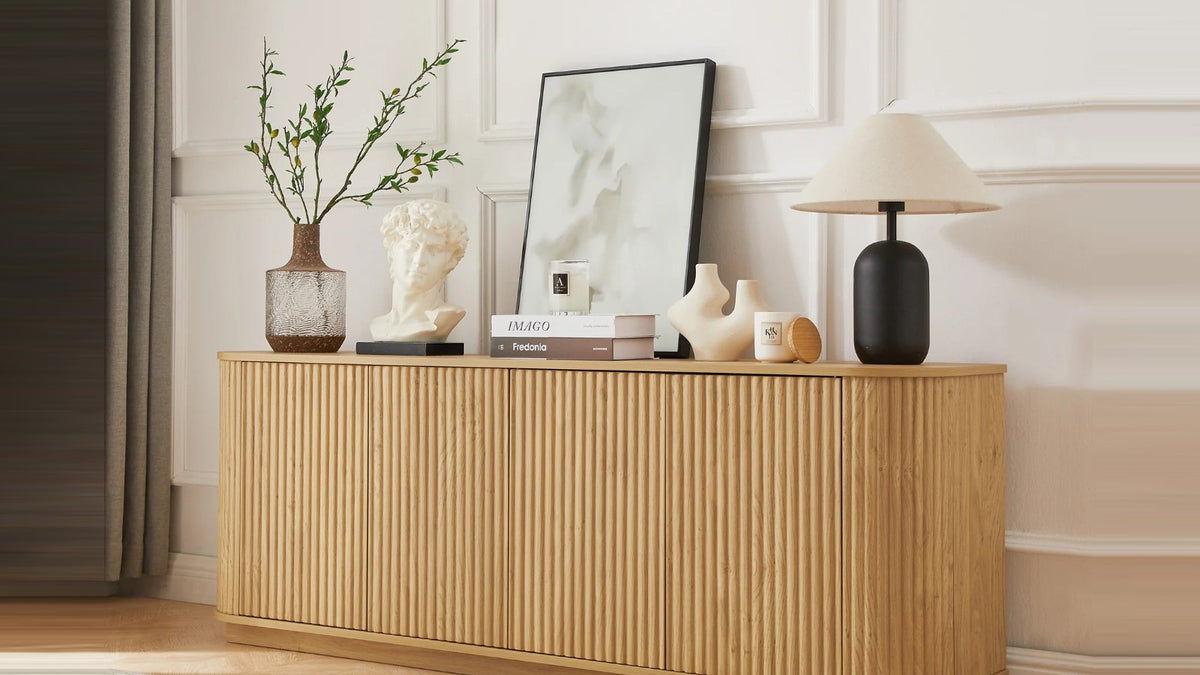
- 55 Inch Fluted Buffet Cabinet with 4 Doors ($229.99)
- 59 Inch Fluted Sideboard with Power Outlet ($199.99)
- 60 Inch Mid-Century Sideboard Buffet ($339.99)
- 63 Inch Sideboard Buffet Cabinet with Grille Doors ($219.99)
- 64 Inch Wave Pattern Sideboard Buffet Cabinet ($329.99)
With a hutch:
Browse all dining room furniture. Every order ships free in the US, with 30-day free returns.
Shop this guide
Browse our Dining Room Furniture with free standard shipping on US orders.




Frequently asked questions
How tall should a sideboard be?
Most sideboards and buffets are 30 to 36 inches tall. In a dining room, choose one that is about as tall as the table or a few inches taller, so serving dishes sit at a comfortable height.
How deep is a standard sideboard?
About 16 to 20 inches deep. Narrow models around 12 to 16 inches deep work in hallways, entryways and small dining rooms.
How much space should be between a dining table and a sideboard?
About 36 inches is comfortable, so people can pull out chairs and walk behind them. If space is tight, 30 inches is the usual minimum for walking.
What is the difference between a sideboard and a buffet?
The names are often used for the same piece. A buffet is usually a little taller and longer, a credenza is a similar low storage cabinet often used for media, and a hutch adds an upper cabinet or shelves on top.