Key takeaways
- A queen mattress is 60 by 80 inches; a king is 76 by 80 inches; a California king is 72 by 84 inches.
- About 10 by 10 feet is a practical minimum for a queen; a king is more comfortable in 12 by 14 feet or larger.
- Leave about 24 to 30 inches of walking space on open sides of the bed.
- Keep nightstand tops within a few inches of the mattress top.
Choosing a bed frame starts with the mattress size, but the room matters just as much. A bed that fits on paper can still leave you squeezing past the dresser every morning. This guide covers standard mattress sizes, the room size each one needs, clearance around the bed, nightstand height and the difference between platform beds and frames that use a box spring.
Standard mattress sizes
US mattress sizes are standard in width and length, so the frame you choose should match the mattress label. Mattress thickness is not standard and varies by model.
| Size | Width x length | Good for |
|---|---|---|
| Twin | 38 x 75 in | Kids' rooms, bunk beds, small guest rooms |
| Twin XL | 38 x 80 in | Taller teens and adults sleeping alone |
| Full (double) | 54 x 75 in | One adult who wants more width; small guest rooms |
| Queen | 60 x 80 in | Couples and most primary bedrooms |
| King | 76 x 80 in | Couples who want more personal space |
| California king | 72 x 84 in | Taller sleepers; longer, narrower rooms |
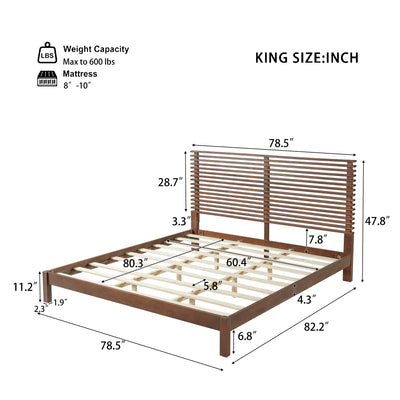
The bed frame adds to the footprint. A frame with a thick headboard, footboard or wide side rails can add several inches in each direction, so always check the frame's overall dimensions on the product page, not just the mattress size.
Choosing a size for two sleepers
For couples, it helps to divide the width by two. A full gives each person 27 inches, which many couples find tight. A queen gives each person 30 inches, and a king gives each person 38 inches, the same width as a twin. That is why a king is often the choice for couples who move a lot at night, or who share the bed with a child or pet.
A California king is 4 inches narrower than a king but 4 inches longer. It suits taller sleepers and longer, narrower rooms. Check that sheets and bedding are labeled California king, since standard king sheets won't fit it properly.
How big should the bedroom be?
Most US building codes treat about 70 square feet (roughly 7 by 10 feet) as the smallest legal bedroom. That is enough for a twin bed but tight for anything larger. These are practical room sizes for each bed:
- Twin: fits a 7 by 10 foot room; more comfortable at 80 to 100 square feet.
- Full: workable at about 100 square feet; more comfortable at 110 to 120 square feet.
- Queen: about 10 by 10 feet is the practical minimum; 12 by 12 feet leaves room for a dresser and nightstands.
- King and California king: avoid rooms smaller than about 12 by 12 feet; 12 by 14 feet is comfortable.
A simple check: the bed should take up no more than about a third of the floor. If it covers much more, the room will feel crowded once other furniture goes in.

Clearance around the bed
Clearance is the open floor you need to walk, make the bed and open drawers. Plan for:
- Walking space: about 24 to 30 inches on each side of the bed you use. In a larger room, 36 inches feels generous.
- In front of a dresser: about 36 to 42 inches, so drawers open fully and you can stand in front of them.
- Headboard wall: a queen with two nightstands needs about 9 feet of open wall; a king with two nightstands needs about 10.5 feet.
Before you buy, mark the frame's footprint on the floor with painter's tape. Add the nightstands and dresser, then walk the room. Check that doors, closet doors and windows still open without hitting the bed.
Nightstand height and placement
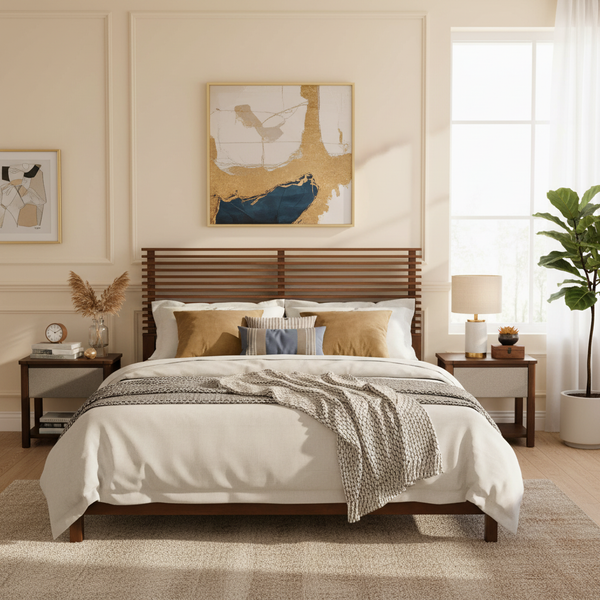
A nightstand is easiest to use when its top is close to the height of the mattress top, within about 2 to 4 inches. That puts your phone, lamp and glass of water within easy reach while you're lying down.
- Measure from the floor to the top of the mattress, including any topper, once the bed is set up.
- Taller beds with thick mattresses or storage frames need taller nightstands.
- Low platform beds look best with lower, wider nightstands.
- Leave room for nightstand drawers to open without hitting the bed frame.

Platform bed or box spring?
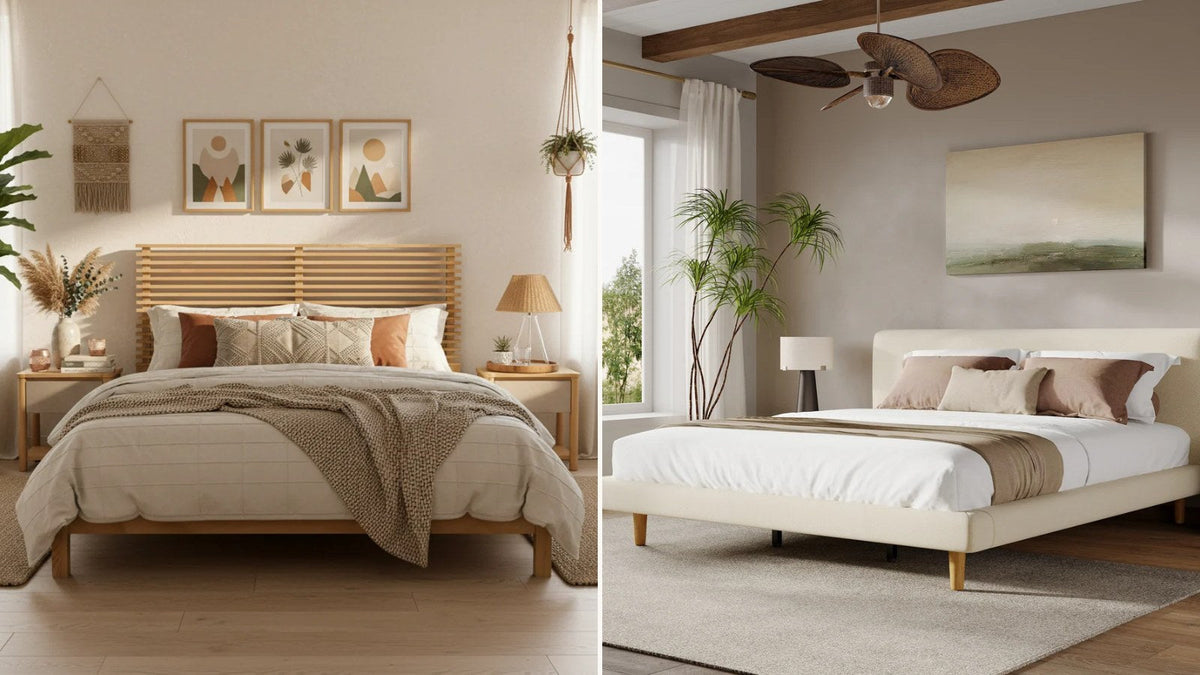
A platform bed has a built-in support surface, usually wooden or metal slats or a solid deck. The mattress sits right on it, so you don't need a box spring. Platform beds are often lower to the floor and have a clean, modern look. Some include drawers or lift-up storage underneath.
For foam and hybrid mattresses, slat spacing matters. A common recommendation is slats no more than about 3 inches apart, and about 2.75 inches or less for all-foam mattresses. Wider gaps can let the mattress sag and may affect the mattress warranty, so check your mattress maker's support requirements.
A traditional bed frame holds the mattress up with side rails and a few cross supports, and it is designed to be used with a box spring or foundation. This setup raises the sleeping surface, which some people find easier to get in and out of. Many foam mattresses don't need a box spring, so if you already own a foundation, check that it suits your mattress type.
Bed height
Total bed height is the frame height plus the foundation (if any) plus the mattress. When sitting on the edge of the bed, your feet should rest on the floor. Taller beds can be harder for children and older adults to get into, while very low beds can be harder to get out of.
Headboards and storage
Upholstered headboards are comfortable to lean against when reading in bed. Wood and metal headboards are easy to wipe clean. If you place the bed under a window, check the headboard height against the windowsill. In smaller rooms, a frame with built-in drawers or a lift-up base can replace a dresser and free up floor space, but leave room on the sides or at the foot for the drawers to open.
Before you order
- Mattress size confirmed, and the frame matched to it.
- Frame's overall width and length checked, including headboard and footboard.
- About 24 to 30 inches of walkway on open sides of the bed.
- Dresser drawers and closet doors able to open fully.
- Nightstand height within a few inches of the mattress top.
- Slat spacing or foundation suited to your mattress type.
Browse our bedroom furniture and compare each frame's dimensions with your room plan. For bedside lighting, see our LED lights and lamps.
Shop this guide
Browse our Bedroom Furniture with free standard shipping on US orders.




Frequently asked questions
What size is a queen bed in inches?
A standard queen mattress is 60 inches wide and 80 inches long. The frame adds to that, so check the frame's overall dimensions.
Can a king bed fit in a 10 by 12 foot room?
It can physically fit, but it will leave little walking space. A king is more comfortable in a room of at least 12 by 12 feet, ideally around 12 by 14 feet.
How much space should be around a bed?
Plan about 24 to 30 inches of walking space on each side you use, and about 36 to 42 inches in front of a dresser so the drawers open fully.
Do I need a box spring with a platform bed?
No. A platform bed has its own slats or solid deck. For foam mattresses, check that the slats are no more than about 3 inches apart, or follow your mattress maker's guidance.