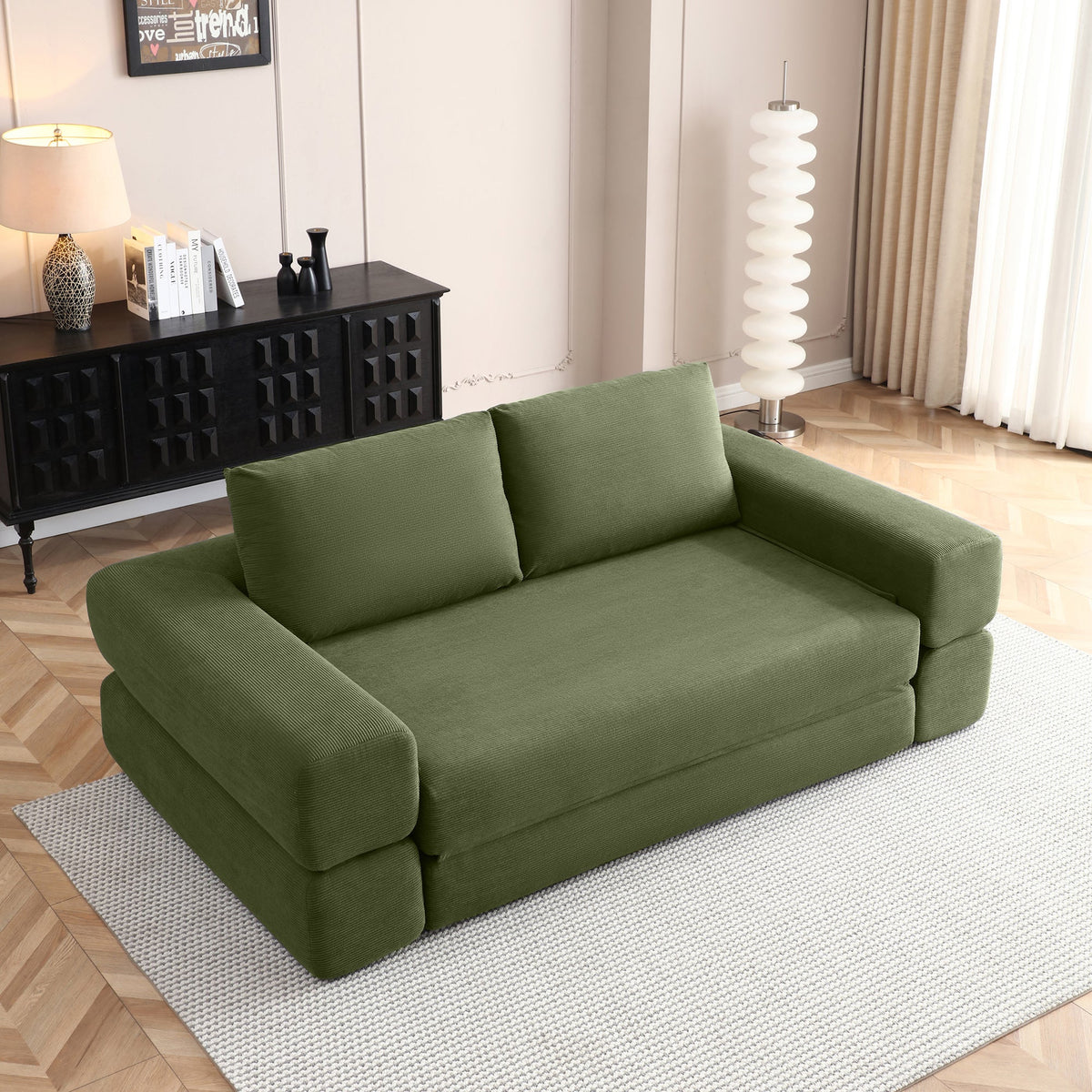
A sleeper sofa gives you a couch by day and a guest bed by night. The right one depends on how often people will sleep on it, how much floor space you have, and how it will get through your door. This guide explains the main types, sizes and the space you need.
Types of sleeper sofas
- Pull-out sleeper: remove the seat cushions and pull out a folding frame with a thin mattress.
- Convertible (click-clack) sofa bed: the back folds down flat to make the bed, usually in one motion. Often lighter and simpler.
- Sleeper sectional: a sectional with a pull-out bed, and sometimes a storage chaise you can lift open.
- Futon: a simple frame and mattress, usually best for occasional use.
Sleeper mattress sizes
| Size | Standard mattress | Note |
|---|---|---|
| Twin | 38 x 75 in | One sleeper |
| Full | 54 x 75 in | One adult or a child pair |
| Queen | 60 x 80 in | Sleeper queens are often shorter, about 72 to 74 in long |
Standard sizes are from the Sleep Foundation. Sleeper mattresses can be shorter than standard beds, so always check the sleeping surface size on the product page.
How much space you need when it is open
- Castlery suggests about 75 to 85 inches from the wall for a twin when open, 80 to 88 inches for a full, and 85 to 90 inches for a queen.
- Leave a walkway around the open bed. Advice ranges from about 18 to 24 inches (Raymour and Flanigan) to 24 inches or more (Castlery).
- Check that a coffee table can move out of the way easily.
Will it fit through the door?
- Measure the width and height of every door, hallway, stair and elevator on the way in (Crate and Barrel, Pottery Barn).
- Compare them with the sofa's width, depth, height and the box size if it ships in a box.
- Sectionals arrive in pieces, which usually makes delivery easier.
Comfort: occasional or nightly use?
- Pull-out mattresses are often only about 4 to 6 inches thick. Look for 5 inches or more if guests stay often.
- Mattress types include innerspring, memory foam and hybrid. A mattress topper can add comfort.
- For nightly sleeping, test the support and look for a sturdy frame and smooth, steel mechanism.
Frame, mechanism and fabric
- A solid wood or metal frame lasts longer than particleboard.
- The bed should open and close smoothly without squeaks.
- Performance fabric, microfiber or leather are easier to clean in a busy room.
- Weight limits vary by model, so check the product specs.
Shop sleeper sofas and sofa beds and all sofas and sectionals, or read our sofa size guide.
Shop this guide
Browse our Sleeper Sofas & Sofa Beds with free standard shipping to the contiguous US.


Frequently asked questions
How much space does a queen sleeper sofa need when open?
Plan for about 85 to 90 inches from the wall to the end of the open bed, plus a walkway of about 18 to 24 inches around it.
What size is a queen sleeper sofa mattress?
A standard queen is 60 x 80 inches, but many sleeper sofa queens are shorter, about 60 x 72 to 74 inches. Check the product specs.
Can you sleep on a sleeper sofa every night?
You can, but pick one with a thicker mattress (5 inches or more), a sturdy frame and good support. Many sleepers are designed for occasional guests.
What is the difference between a sleeper sofa and a sofa bed?
A pull-out sleeper hides a folding bed under the seat cushions. A convertible sofa bed folds its back down flat to make the bed.
How do I know a sleeper sofa will fit through my door?
Measure the width and height of every door, hall and stair on the way in, and compare them with the sofa or box dimensions on the product page.