
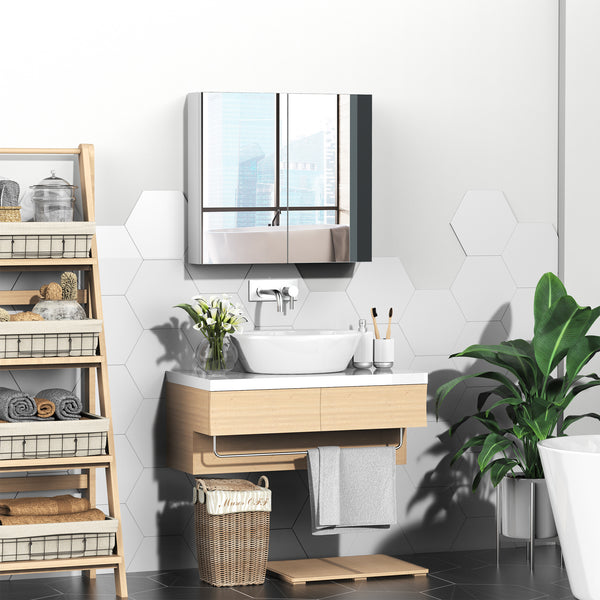
A small bathroom needs smart storage. A medicine cabinet, a wall cabinet or a towel warmer can free up the counter and keep daily items close. This guide explains how to choose the size, the mounting type and the features that suit your space.
The quick rules
- Width: a medicine cabinet over the sink usually looks best when it is the same width as the vanity or a little narrower.
- Height: hang it so the mirror sits around eye level for the people who use it most, with a few inches of space above the faucet.
- Mounting: surface-mount cabinets hang on the wall; recessed cabinets sit inside the wall between studs.
- Power: LED cabinets and towel warmers need power; check whether the model plugs in or must be hardwired.
Surface-mount or recessed?
A surface-mount cabinet is the easiest to install: it screws onto the wall and works in almost any bathroom. A recessed cabinet sits inside the wall, so it sticks out less and saves space in a tight room. Before you choose recessed, check the wall: studs are usually 16 inches apart, and pipes, wires or vents may be inside. Many cabinets can be installed either way; the product page lists the options and the opening size you need.
Choosing the size
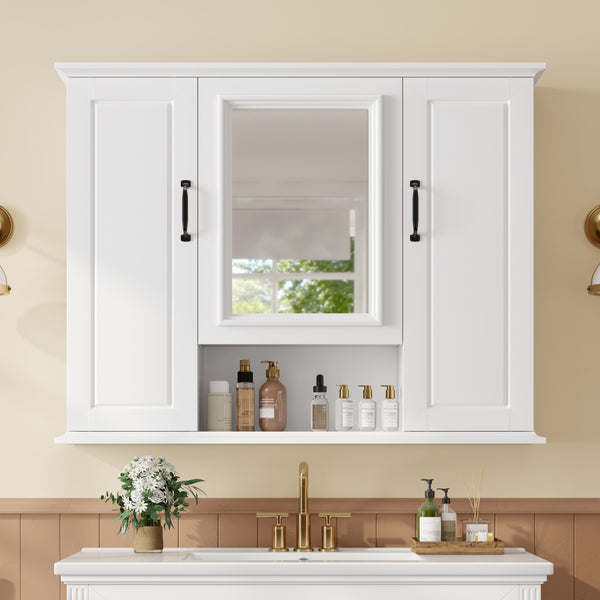
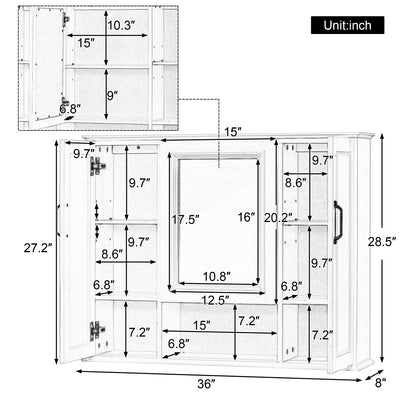
Measure the width of your vanity and the wall space above it, from the backsplash to the ceiling or light fixture. Leave room for lights on each side and for the doors to open without hitting a wall or a fixture. Larger three-door cabinets suit double vanities or wide sinks; a single-door cabinet fits a small powder room. Check the inside depth too, so tall bottles fit on the shelves.
Useful features
- Mirror doors: a mirror on the front, and sometimes inside, replaces a separate mirror.
- Adjustable shelves: fit tall bottles and small jars.
- LED lighting: adds even light for grooming; check dimming, color modes and anti-fog options on the product page.
- Open shelves: keep towels or decor on show.
- Soft-close hinges: stop doors from banging.
Towel warmers
A heated towel rack warms and dries towels. Wall-mounted racks save floor space, while freestanding racks can move between rooms. Look at the number of bars, the power type and whether it has a timer. Follow the manual for placement near tubs and showers, and use a bathroom outlet with GFCI protection.
Installation and safety
Use wall anchors or screw into studs, since a full cabinet with mirror doors can be heavy. Hardwired lights and towel warmers should be connected by a qualified electrician. Turn off the power before working near wiring, and keep plug-in items away from running water.
Ready to shop? Browse our bathroom storage, including medicine cabinets, wall cabinets and towel warmers, or match them with our bathroom vanities.
Shop this guide
Browse our Bathroom Storage with free standard shipping to the contiguous US.


Frequently asked questions
What size medicine cabinet should I get?
Choose a cabinet about the same width as your vanity or a little narrower, and make sure there is room for lights and for the doors to open. Check the inside depth so your bottles fit.
What is the difference between a recessed and a surface-mount medicine cabinet?
A surface-mount cabinet hangs on the wall and is easy to install. A recessed cabinet sits inside the wall between the studs, so it sticks out less, but it needs a clear wall cavity.
Do LED medicine cabinets need an electrician?
It depends on the model. Plug-in models only need a nearby outlet, while hardwired models should be connected by a qualified electrician. The product page shows the power type.