
A desk that fits your room and your work makes long days easier. Before you buy, measure the space, decide how many screens you use, and think about storage and power. This guide covers desk width, depth and height, L-shaped versus straight desks, and standing desks.
The quick rules
- Width: about 40–48 inches for a laptop, 55–60 inches for one monitor plus paperwork, and 60 inches or more (or an L-shaped desk) for two monitors.
- Depth: at least 20–24 inches; about 24–30 inches if you use a large monitor.
- Height: most sitting desks are about 28–30 inches tall.
- Clearance: leave about 36 inches behind the desk so your chair can roll back.
How wide should your desk be?
Start with what sits on the desk every day. A laptop, a lamp and a notebook fit on a 40–48 inch desk. One monitor with a keyboard, mouse and some papers is more comfortable on 55–60 inches. Two monitors, or a monitor plus a laptop, need 60 inches or more, or an L-shaped desk that gives you a second work surface. Measure the wall or corner first, and keep a little space on each side so the desk does not feel squeezed.
Depth and height
Depth decides how far the screen sits from your eyes. A shallow desk (under 20 inches) works for a laptop. For a monitor, 24 inches or more lets you place the screen about an arm's length away. Most sitting desks are about 28–30 inches high. When you type, your elbows should be at roughly a right angle and your shoulders relaxed. If the desk is a little high, raise the chair and use a footrest.
L-shaped or straight desk?
An L-shaped desk turns an empty corner into a large workspace. It suits people who use two screens, spread out paperwork, or want one side for a computer and the other for writing. Many L-shaped desks can be set up with the return on the left or right; check the product page. A straight desk is easier to place against a wall or under a window and works well in small rooms and bedrooms.
Standing desks and converters
An electric standing desk changes height with a button, so you can switch between sitting and standing during the day. Memory presets save your favorite heights. Set the desk so your elbows stay at about a right angle in both positions. If you want to keep your current desk, a standing desk converter sits on top of it and lifts your screen and keyboard.
Storage and power
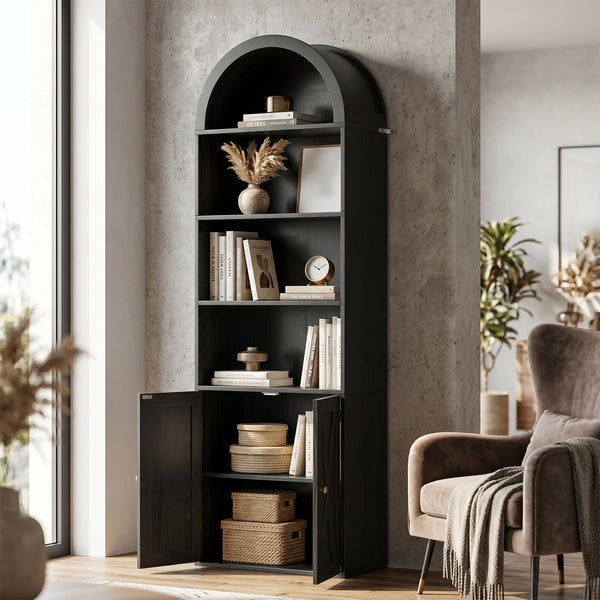
Think about what you need within reach. A file drawer keeps documents in order, and a storage cabinet hides printer paper and supplies. Desks with a built-in charging station or power outlet cut down on cords across the floor. A hutch or a separate bookcase adds shelf space without taking more floor area.
Before you order
- Measure the wall or corner, and the doorways and stairs on the delivery path.
- Count your screens and devices.
- Check the desk height against your chair.
- Look at the product page for the exact size, weight capacity and assembly details.
Ready to shop? Browse our home office furniture, including computer desks, L-shaped desks, standing desks and bookcases.
Shop this guide
Browse our Home Office Furniture with free standard shipping to the contiguous US.


Frequently asked questions
What is a good desk size for two monitors?
Two monitors usually need a desk at least 60 inches wide, or an L-shaped desk, with a depth of about 24 inches or more so the screens sit about an arm’s length away.
What is the standard desk height?
Most sitting desks are about 28 to 30 inches tall. The right height lets your elbows rest at roughly a right angle while you type, with your shoulders relaxed.
How much space do I need behind a desk?
Leave about 36 inches between the desk and the wall or furniture behind you, so your chair can roll back and you can stand up easily.