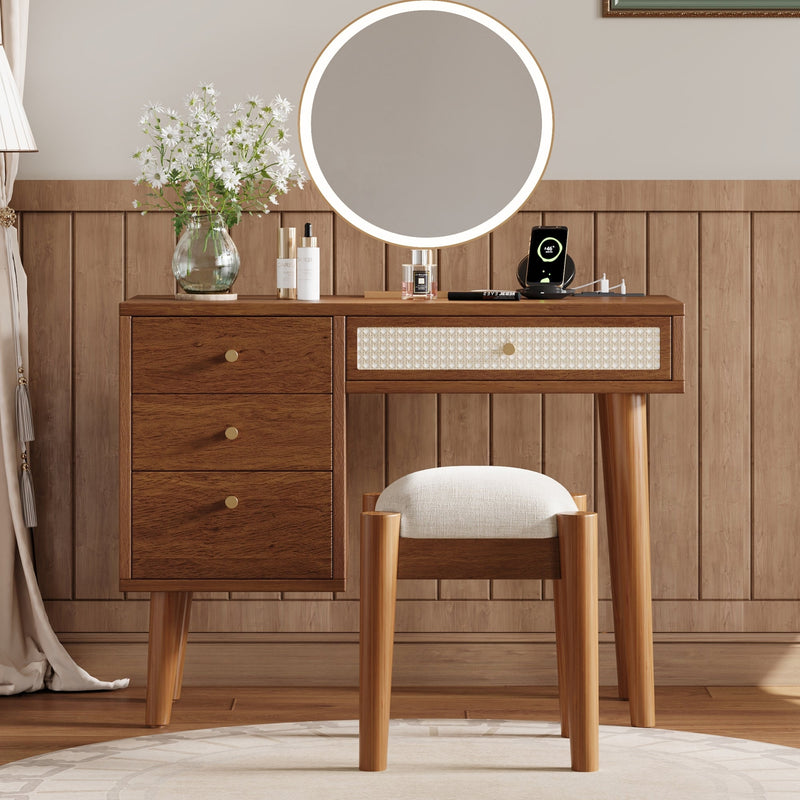
A floating vanity mounts to the wall instead of standing on the floor. It makes a bathroom look bigger and is easy to clean under, but it needs a strong wall and plumbing that comes out of the wall. This guide covers height, mounting, plumbing and the pros and cons so you can plan before you buy.
How high to mount a floating vanity
- One big plus of a floating vanity is that you choose the height (Lowe's, Kohler).
- Older standard vanities are about 30 to 32 inches tall. Many people now prefer about 32 to 36 inches, and 34 inches is a common choice today (Home Depot, This Old House).
- For wheelchair users, Home Depot suggests about 29 to 34 inches. The ADA limit for an accessible sink is 34 inches to the rim or counter.
| Setup | Common counter height |
|---|---|
| Standard sink, average adults | about 32 to 36 in |
| Vessel sink about 4 in tall | about 32 in or lower |
| Vessel sink about 6 in tall | about 30 in |
| Accessible (ADA) | 34 in max to rim or counter |
Vessel sink height
A vessel sink sits on top of the counter, and some are up to 6 inches tall. Many installers aim for the top of the bowl at about 36 inches from the floor (Lowe's, Kitchen Cabinet Kings), so mount the cabinet lower than you would for an undermount sink.
Wall support: studs and blocking
- Fix a floating vanity into wall studs, not just drywall. Home Depot suggests adding horizontal wood blocking between the studs.
- A vanity full of water, a stone or ceramic top, and someone leaning on it adds a lot of weight. Use the hardware and mounting rail that come with the vanity, and follow its instructions.
- If you are not sure your wall can take the load, use a professional.
Plumbing for a floating vanity
- The drain and water supply lines must come out of the wall, not the floor. If yours come up from the floor, a plumber will need to move them.
- Home Depot lists a common sink drain rough-in of about 16 to 20 inches from the floor, with supply lines a few inches above and to each side.
- Pipe height can limit how high or low you mount the vanity, and pipes may show underneath. Check the cabinet's cutouts and the drawer or shelf space around the trap.
Floating vs freestanding vanity
- Pros: easier to clean the floor, makes the room feel bigger, and you can choose the height.
- Cons: needs a strong wall, may need plumbing changes, often has less storage, and usually takes more work to install.
- If you remove an old floor-standing vanity, you may need to patch the flooring where it stood (Kohler).
Quick checklist
- Confirm the drain and supply lines come from the wall.
- Find the studs or plan blocking.
- Pick your counter height (and sink height for a vessel sink).
- Check the vanity width, depth and included hardware on the product page.
Shop floating bathroom vanities and all bathroom vanities, or read our bathroom vanity buying guide and vanity light size guide.
Shop this guide
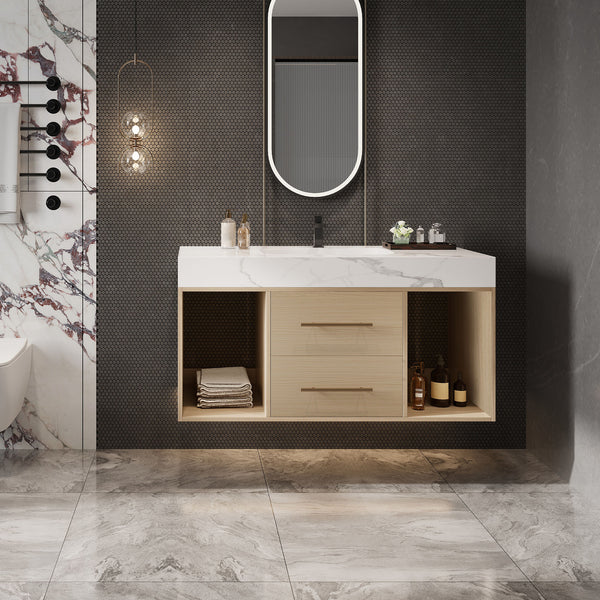
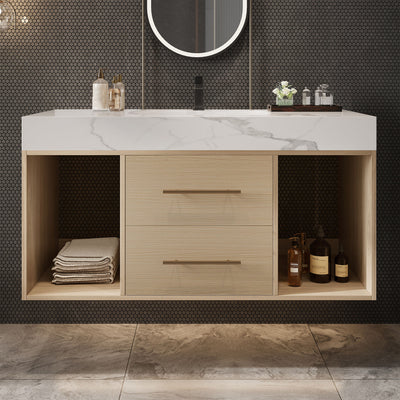
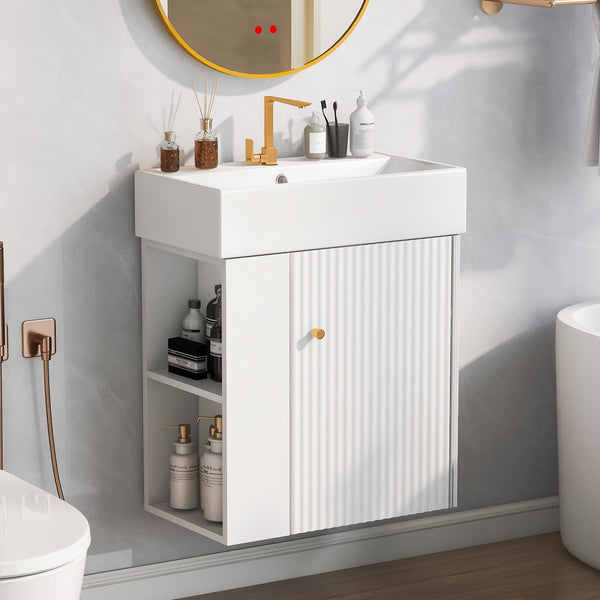
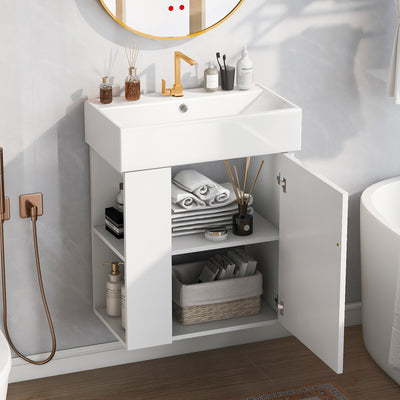
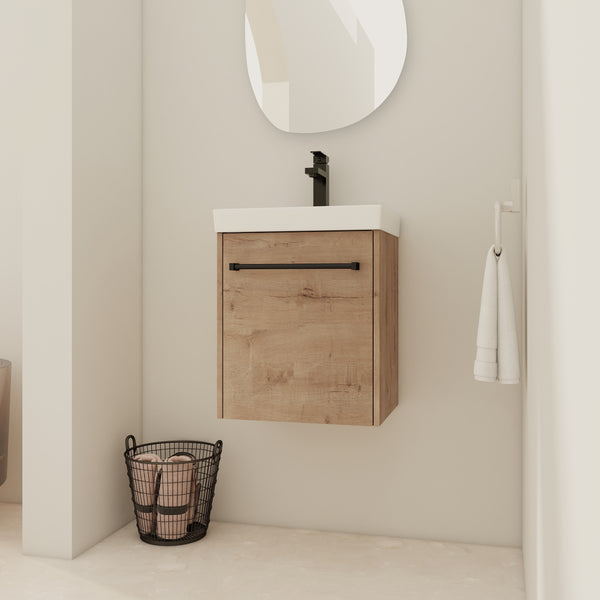
Browse our Floating Bathroom Vanities with free standard shipping to the contiguous US.


Frequently asked questions
How high should a floating vanity be mounted?
Many people choose a counter height of about 32 to 36 inches, with 34 inches common today. With a floating vanity you can pick the height that suits your family.
What height should a vanity be for a vessel sink?
Mount it lower so the top of the bowl ends near 36 inches. For a 4 inch tall sink that is a counter of about 32 inches or lower, and about 30 inches for a 6 inch sink.
Does a floating vanity need to be screwed into studs?
Yes. Fix it into studs or into wood blocking added between the studs, not into drywall alone.
Can I install a floating vanity if my plumbing comes from the floor?
Not without changes. A floating vanity needs the drain and water lines to come out of the wall, so a plumber would need to move them.
Is a floating vanity better than a freestanding one?
It depends. Floating vanities are easier to clean under and look lighter, while freestanding vanities are easier to install and usually offer more storage.